
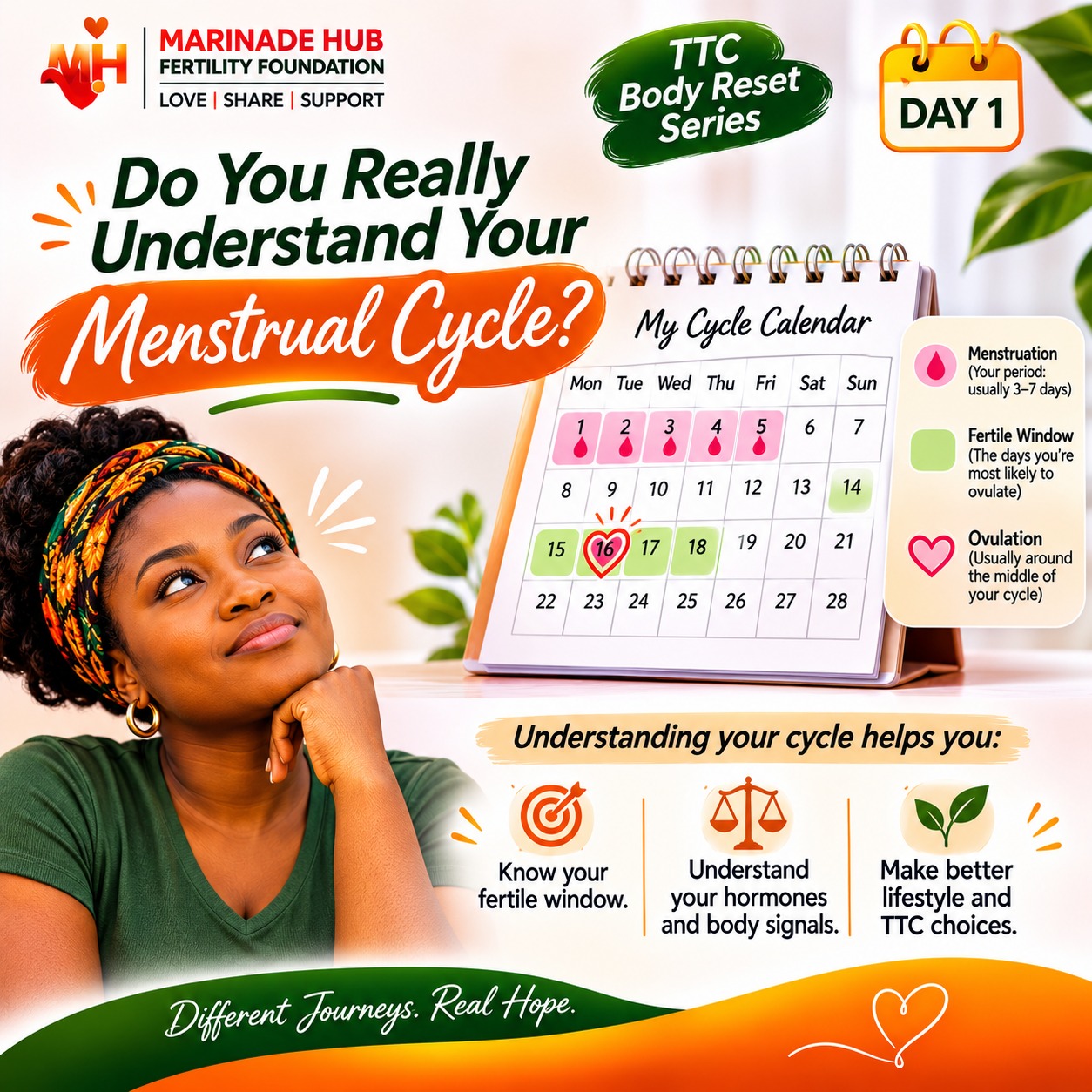
UNDERSTANDING YOUR MENSTRUAL CYCLE: 6 THINGS EVERY WOMAN SHOULD KNOW
Your menstrual cycle is more than just your monthly period. It is a natural process involving hormonal changes that prepare your body for a possible pregnancy.
Understanding your cycle can help you recognise your fertile window, identify ovulation and become more aware of your reproductive health.Chill
Here are six important things every woman should know.
1. Understand the Four Phases of Your Menstrual Cycle
Your menstrual cycle has four main phases:
– Menstruation: Your uterine lining sheds, resulting in your period.
– Follicular phase: Hormones stimulate the development of follicles in the ovaries.
– Ovulation: An egg is released from the ovary.
– Luteal phase: Your body prepares for a possible pregnancy.
Understanding these phases helps you become more familiar with your body’s natural rhythm.
2. Know How to Calculate Your Cycle
Your menstrual cycle begins on the first day of your period and ends the day before your next period starts.
For example, if your period begins on January 1 and your next period starts on January 29, your cycle length is 28 days.
A 28-day cycle is not compulsory. Many adult women have cycles lasting approximately 21–35 days.
3. Understand Your Fertile Window
Your fertile window is the period when pregnancy is most likely to occur.
It generally includes the five days before ovulation and the day of ovulation.
Ovulation does not happen on day 14 for every woman. It varies depending on individual cycle patterns.
If you’re trying to conceive, understanding your fertile window can help you make more informed decisions.
4. Recognise Possible Signs of Ovulation
Your body may show certain changes around ovulation, including:
– Clear, stretchy cervical mucus.
– Mild lower abdominal discomfort.
– Increased sexual desire.
– Breast tenderness.
– A slight rise in basal body temperature after ovulation.
Not every woman experiences these signs, and symptoms alone cannot confirm ovulation.
5. Pay Attention to Changes in Your Cycle
Your menstrual cycle can provide useful information about your reproductive health.
Pay attention to persistent changes such as irregular periods, unusually heavy bleeding, severe menstrual pain, missed periods or bleeding between periods.
Conditions such as PCOS, thyroid disorders and endometriosis can affect menstrual patterns.
Don’t ignore persistent changes. Speak with a qualified healthcare professional when necessary.
6. Make Cycle Tracking a Habit
Tracking your menstrual cycle doesn’t have to be complicated.
You can use a notebook, calendar or period-tracking application.
Record:
– The first day of your period.
– Your cycle length.
– Menstrual flow.
– Cramps and other symptoms.
– Changes in cervical mucus.
– Possible ovulation signs.
– Unusual spotting or bleeding.
Tracking consistently over several months can help you recognise your body’s patterns.
Remember that period-tracking applications provide estimates and cannot always confirm ovulation.
FINAL THOUGHTS
Understanding your menstrual cycle is an important step towards taking charge of your reproductive health.
Whether you’re trying to conceive, planning for the future or simply learning more about your body, paying attention to your cycle can help you make informed health decisions.
Your body communicates through changes and patterns. Learn to pay attention, ask questions and seek medical advice when something doesn’t seem right.
At The Marinade Hub Fertility Foundation, we believe that fertility education begins with understanding your body.
Your knowledge matters. Your reproductive health matters.
Learn. Track. Understand. Take charge of your health.
Visit: https://marinadehub.org/
Disclaimer: This article is for educational purposes only and does not replace professional medical advice, diagnosis or treatment.
—
#MarinadeHub #MenstrualHealth #CycleAwareness #OvulationAwareness #FertilityEducation #WomensHealth #CycleTracking #ReproductiveHealthPublishing