# Understanding the Rhesus Factor: What Every Woman Should Know Before and During Pregnancy
**By The Marinade Hub Fertility Foundation**
## Introduction
When you check your blood group, you may see a positive (+) or negative (−) sign after it, such as A+, O−, B+, or AB−. But what do these signs mean, and why are they important during pregnancy?
The positive or negative sign refers to your Rhesus (Rh) factor, a protein found on the surface of red blood cells. Understanding your Rhesus status is an important part of pregnancy planning and antenatal care because, in certain circumstances, it can affect the health of your baby.
At The Marinade Hub Fertility Foundation, we believe that knowledge empowers women to make informed decisions about their reproductive health. Let’s explore what the Rhesus factor means, why it matters, and how appropriate medical care can help prevent complications.
## What Is the Rhesus Factor?
The Rhesus factor, commonly called the Rh factor, is a protein found on the surface of red blood cells.
– **Rh-positive (Rh+):** The protein is present.
– **Rh-negative (Rh−):** The protein is absent.
For example, a woman with blood group O+ is Rh-positive, while a woman with blood group O− is Rh-negative.
Being Rh-negative is not an illness, and it does not mean you cannot conceive or have a healthy pregnancy. However, if an Rh-negative woman carries an Rh-positive baby, certain precautions may be necessary to prevent complications.
This is why knowing your blood group and Rhesus status is important before or early in pregnancy.
## Why Does the Rhesus Factor Matter During Pregnancy?
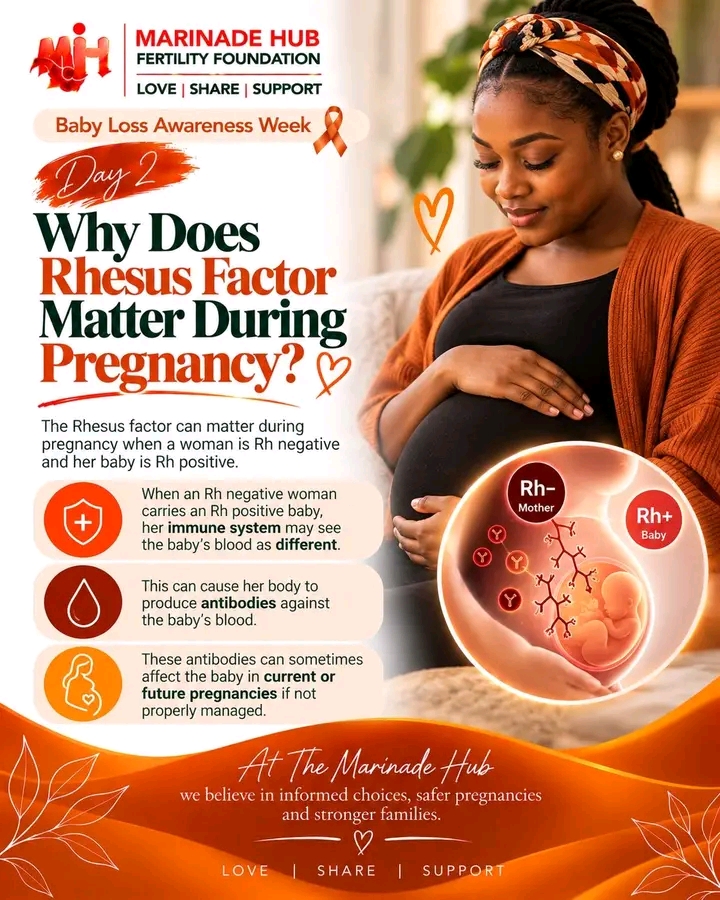
Rhesus incompatibility can occur when an Rh-negative mother carries an Rh-positive baby.
During pregnancy, childbirth, or certain pregnancy-related events, a small amount of the baby’s blood may enter the mother’s bloodstream. Her immune system may recognise the baby’s Rh-positive red blood cells as foreign and begin producing antibodies against them.
This process is called **Rh sensitisation**.
These antibodies can cross the placenta and destroy the baby’s red blood cells, potentially causing a condition known as haemolytic disease of the fetus and newborn (HDFN).
Possible complications include:
– Anaemia in the baby.
– Jaundice after birth.
– Severe fetal illness and, in serious cases, life-threatening complications.
Sensitisation may not cause obvious problems in the pregnancy when it first occurs, but the antibodies can affect a subsequent Rh-positive pregnancy.
The good news is that appropriate screening, antenatal care, and preventive treatment can significantly reduce this risk.
## What Is the RhoGAM Injection?
RhoGAM is a brand of Rh immune globulin, commonly known as anti-D immunoglobulin.
It is a preventive medication used for eligible Rh-negative women who have not already developed the relevant antibodies. It helps prevent the mother’s immune system from becoming sensitised to Rh-positive red blood cells.
Anti-D works by helping the body clear these cells before the immune system develops its own lasting antibody response.
It is important to understand that:
– RhoGAM does not change your blood group.
– It is not a fertility drug and does not help a woman conceive.
– Not every pregnant woman needs it.
– It generally cannot reverse Rh sensitisation once the relevant antibodies have developed.
Your healthcare provider will determine whether anti-D is appropriate based on your Rhesus status, antibody screening results, pregnancy history, and individual circumstances.
## When Might an Rh-Negative Woman Need Anti-D?
Anti-D may be recommended at different stages of pregnancy, depending on local clinical guidelines and individual circumstances.
These may include:
**1. During pregnancy**
Routine preventive anti-D is commonly offered around 28 weeks of pregnancy in many healthcare settings. The timing and dosing schedule may vary.
**2. After childbirth**
If an Rh-negative mother gives birth to an Rh-positive baby, anti-D is generally recommended within 72 hours, when indicated.
**3. Following certain pregnancy-related events**
Anti-D may be recommended after events that could allow fetal blood to enter the mother’s bloodstream, including some episodes of vaginal bleeding, abdominal trauma, or invasive prenatal procedures.
**4. Following miscarriage, pregnancy loss, or ectopic pregnancy**
Whether anti-D is recommended depends on factors such as gestational age, the circumstances of the pregnancy loss, the procedure involved, and the applicable clinical guidelines.
If you are Rh-negative and experience bleeding during pregnancy or a pregnancy loss, contact your healthcare provider promptly to determine whether anti-D is needed and how soon it should be administered.
Do not delay seeking medical advice while trying to determine your eligibility on your own.
## Can Rhesus Incompatibility Affect Future Pregnancies?
Yes. Rh sensitisation can affect future pregnancies if the mother has developed antibodies and the baby is Rh-positive.
Once sensitisation has occurred, the mother’s antibodies may cross the placenta and destroy the baby’s red blood cells. This can cause fetal anaemia and other complications.
This is why early antenatal testing and preventive anti-D treatment, when indicated, are important.
If you have previously been pregnant, experienced a miscarriage or ectopic pregnancy, received a blood transfusion, or had a previous Rh-related complication, tell your healthcare provider. This information can help guide your care.
Remember, being Rh-negative does not automatically mean you will experience pregnancy complications. Many Rh-negative women have healthy pregnancies and healthy babies.
## What If You Are Rh-Negative and Already Have Antibodies?
An Rh-negative result does not automatically mean you have developed antibodies.
Your healthcare provider can request an **antibody screening blood test** to check whether your immune system has produced antibodies that may affect a pregnancy.
If clinically significant antibodies are detected, routine anti-D is generally not effective at reversing sensitisation. Instead, your healthcare team may recommend specialist assessment and closer monitoring of the pregnancy.
Depending on the antibody identified and the level of risk, monitoring may include:
– Additional blood tests.
– Ultrasound examinations.
– Specialised ultrasound assessment of blood flow to help detect fetal anaemia.
– Further treatment or intervention if complications develop.
A positive antibody screen does not mean that a baby will inevitably be harmed. The next step is to identify the antibody, understand the results, and follow an appropriate care plan.
If you receive an abnormal result, ask your healthcare provider to explain what it means for your pregnancy.
## What Tests Should You Ask About During Antenatal Care?
Whether you are planning a pregnancy or are already pregnant, discuss the following with your healthcare provider:
– **Blood group and Rhesus testing:** To establish whether you are Rh-positive or Rh-negative.
– **Antibody screening:** To check for antibodies that could affect your baby.
– **Anti-D eligibility:** To determine whether preventive treatment is recommended and when it should be given.
– **Follow-up monitoring:** If antibodies are detected or your pregnancy history indicates an increased risk.
These tests and discussions help your healthcare team identify potential concerns early and plan appropriate care.
## Important Facts to Remember About the Rhesus Factor
Here are the key takeaways from this discussion:
1. Your blood group includes both your ABO group and your Rhesus status.
2. Being Rh-negative is not a disease and does not mean you are infertile.
3. Rh incompatibility does not automatically lead to complications; the main concern is whether sensitisation occurs.
4. Anti-D can help prevent sensitisation in eligible Rh-negative women, but it does not reverse established sensitisation.
5. Anti-D is not necessary for every woman. Your test results and clinical circumstances determine whether it is appropriate.
6. Early antenatal care, timely testing, and clear communication with your healthcare provider are essential.
## Final Thoughts: Know Your Rhesus Status, Protect Your Pregnancy
Understanding your Rhesus factor is a small but important step towards protecting your reproductive health.
If you are planning to conceive, currently pregnant, or hoping for another baby, make your Rhesus status part of your conversations with your healthcare provider. Ask questions, understand your test results, and seek medical advice whenever you have concerns.
At The Marinade Hub Fertility Foundation, we encourage women and families to seek reliable information, access appropriate medical care, and support one another throughout their fertility journeys.
**Knowledge brings confidence, early care creates opportunities for prevention, and every woman deserves the information she needs to make informed decisions about her health.**
Share this article with a friend, sister, partner, or expectant mother who may benefit from understanding the Rhesus factor.
*Disclaimer: This article is for educational purposes only and is not a substitute for professional medical advice, diagnosis, or treatment. Recommendations regarding anti-D may vary according to local clinical guidelines and individual circumstances. Always consult a qualified healthcare professional.*
**The Marinade Hub Fertility Foundation — Supporting informed choices, healthier pregnancies, and hopeful fertility journeys.**
#MarinadeHub #RhesusFactor #RhNegative #RhoGAM #AntiDInjection #PregnancyEducation #AntenatalCare #MaternalHealth #FertilityAwareness #PregnancyPlanning