
Baby Loss Awareness: Understanding Miscarriage, Management and the Journey Through Grief
Baby Loss Awareness Week | Miscarriage Management & Baby Loss Awareness
Some losses are too deep for words.
During Baby Loss Awareness Week, we pause to remember the babies who were here for a moment but left footprints that can last a lifetime. We remember pregnancies that ended too soon, positive tests that brought immense joy, names that were chosen, dreams that were made, and tiny heartbeats that became precious memories.
Miscarriage is not simply “losing a pregnancy.” For many people, it means losing a baby they had already begun to love and a future they had already imagined.
Behind every pregnancy loss is someone who may be silently grieving. This is why conversations about baby loss should be approached with compassion, understanding and sensitivity.
At The Marinade Hub Fertility Foundation, we remember, we support, and we hold space for anyone carrying the pain of pregnancy or baby loss.
What Exactly Is Baby Loss?
Baby loss can happen in different ways, and every experience can carry its own kind of grief. It may include:
– Miscarriage
– Recurrent pregnancy loss
– Ectopic pregnancy
– Molar pregnancy
– Stillbirth
– Pregnancy loss following a long-awaited conception
– Loss following fertility treatment
Sometimes, people don’t know what to say because they don’t know what kind of loss someone has experienced. But we don’t always need perfect words.
Sometimes, simply saying:
“I’m sorry.”
“I’m here for you.”
“You don’t have to go through this alone.”
can mean so much.
A person’s grief should never be measured by how far along the pregnancy was. A pregnancy may have been only a few weeks old, but the hopes, dreams and love attached to it may have existed for years.
Every loss deserves compassion.
Misconceptions About Miscarriage
One of the painful parts of miscarriage can be the things people say afterward.
“Maybe you stressed yourself.”
“You should have rested more.”
“Don’t worry, you’ll have another one.”
“At least you know you can get pregnant.”
“Maybe it wasn’t meant to be.”
Although these statements may sometimes be spoken with good intentions, they can make an already painful experience even harder.
Most miscarriages are not caused by something a woman did or failed to do. Pregnancy loss can have many possible causes, and sometimes no definite cause is identified even after medical evaluation.
Please don’t blame yourself, and please don’t blame another woman for her loss.
Instead of asking, “What did you do?” ask, “How are you coping?”
Instead of saying, “You’ll have another baby,” try saying, “I’m here with you through this.”
Compassion costs nothing, but it can mean everything to someone who is grieving.
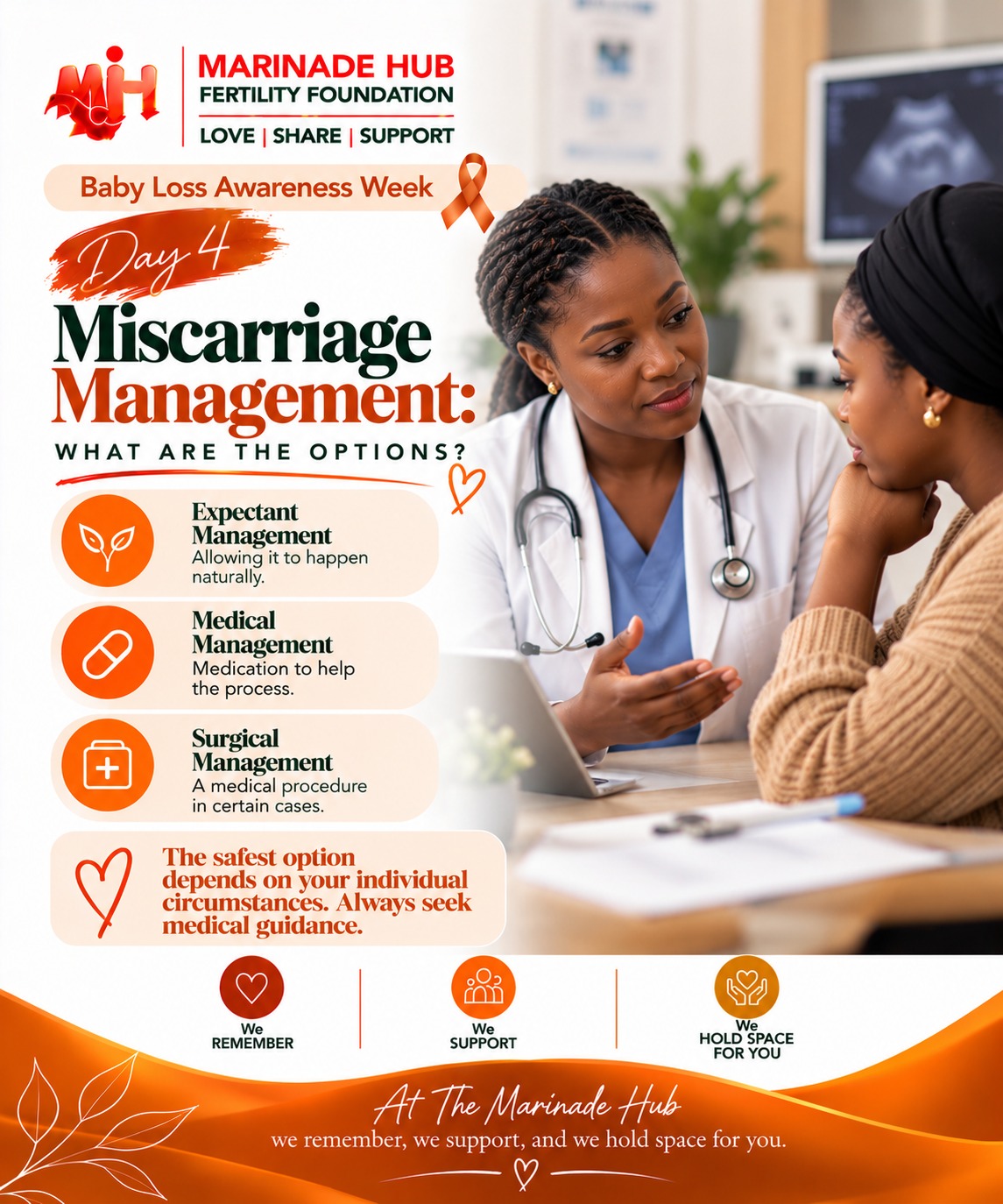
Miscarriage Management: What Are the Options?
When a miscarriage is confirmed, the physical process may not be the same for everyone. Depending on the circumstances, a healthcare professional may discuss different management options.
1. Expectant Management
This involves allowing the miscarriage to happen naturally while being monitored by a healthcare professional.
2. Medical Management
Medication may be prescribed to help the body complete the miscarriage.
3. Surgical Management
A medical procedure may be recommended or chosen in certain circumstances.
There is no single option that is automatically right for everyone. The safest approach depends on factors such as the stage of pregnancy, symptoms, medical history, examination findings and the individual’s circumstances.
This is why miscarriage should be managed with appropriate medical guidance rather than through self-medication or advice from social media.
If you are experiencing heavy bleeding, severe pain, dizziness or fainting, fever, or other concerning symptoms during pregnancy or after a suspected miscarriage, seek urgent medical attention.
Your safety comes first.
And while managing the physical loss is important, the emotional loss deserves care too.
After the Miscarriage: What About the Heart?
The body may begin to heal, but the heart may take much longer.
You may cry unexpectedly. You may avoid baby showers or pregnancy announcements. Seeing someone who is pregnant may bring emotions you cannot explain. Your due date or the anniversary of your loss may become difficult days.
Sometimes you may feel okay one day and completely broken the next.
That does not mean you are going backwards.
Grief is not a straight line.
Give yourself permission to grieve. Talk to someone you trust and seek professional emotional support when you need it.
Partners may also experience deep grief, even when they express it differently.
You don’t have to simply “move on.” Healing can mean learning, slowly and gently, how to carry the memory while continuing to live.
Healing does not mean forgetting your baby.
To the Partners Standing Beside Someone Experiencing Loss
Pregnancy loss affects more than the person who carried the pregnancy.
To husbands and partners: you may not have carried the pregnancy, but you may have carried the fear, appointments, anticipation, disappointment and grief alongside your partner.
You may be hurting too.
You are allowed to grieve. You are allowed to cry. You are allowed to say, “This hurts me too.”
When supporting your partner, you don’t always have to fix the pain or find an explanation.
Sometimes, she may simply need you to sit beside her and say:
“I’m here. We will get through this together.”
For every couple navigating pregnancy loss, may you find patience with each other, room for both your griefs, and the support you need to heal together.
We Remember, We Honour, We Hope
For every mother who lost a baby.
For every father who lost a child.
For every couple whose dreams changed overnight.
For every person who still remembers a due date.
For every parent who never got to take their baby home.
We remember you.
Your baby mattered.
Your pregnancy mattered.
Your hopes mattered.
Your love mattered.
And for those trying again after pregnancy loss, we understand that hope can sometimes come with fear.
A new positive pregnancy test may bring both joy and anxiety. You may find yourself checking every symptom, counting every week, waiting for every scan and praying that this time will be different.
Please be gentle with yourself.
You don’t have to pretend that you aren’t afraid.
You can be hopeful and scared at the same time.
Baby Loss Awareness Week may come to an end, but the conversation should not.
Let us continue creating a community where people experiencing fertility struggles and pregnancy loss can speak without shame, grieve without judgment and find support when they need it.
To the babies gone too soon:
You are remembered.
You are loved.
You will never be forgotten.
And to every family still waiting and hoping:
May you find strength for today and hope for tomorrow.
With love,
The Marinade Hub Fertility Foundation
Love | Share | Support
#BabyLossAwareness #MiscarriageAwareness #PregnancyLoss #MiscarriageSupport #BabyLossSupport #TTCCommunity #PregnancyAfterLoss #TTCJourney #TheMarinadeHub #YouAreNotAloneThis