
Small Lifestyle Changes That Support Your Reproductive Health
When trying to conceive, many people focus on medications and fertility treatments. While these can be important, everyday lifestyle habits—especially nutrition—also play a valuable role in supporting overall reproductive health.
One approach that has gained attention is the anti-inflammatory diet. Rather than being a restrictive eating plan, it is a balanced way of nourishing your body with wholesome, nutrient-rich foods that help support overall wellness.
It is important to remember that while healthy eating supports general health, it is not a cure or treatment for infertility. Instead, it creates a healthier foundation for your body as you navigate your fertility journey.
What Is an Anti-Inflammatory Diet?
Inflammation is your body’s natural response to injury or infection. However, when inflammation becomes long-term (chronic), it may affect many aspects of health, including reproductive health in some individuals.
An anti-inflammatory diet emphasizes:
– Fresh fruits and vegetables
– Whole grains
– Healthy fats
– Lean protein sources
– Foods rich in vitamins, minerals, and antioxidants
The goal is to consistently nourish your body rather than follow a short-term or restrictive diet.
Foods That Naturally Support Overall Wellness
A colourful, balanced plate provides essential nutrients your body needs to function well. Some excellent anti-inflammatory foods include:
– Leafy green vegetables such as spinach and kale
– Berries
– Avocados
– Fatty fish rich in omega-3 fatty acids
– Nuts and seeds
– Beans and legumes
– Olive oil
Remember, no single food can “boost fertility.” What matters most is maintaining a healthy dietary pattern over time.
Foods to Enjoy in Moderation
Healthy eating isn’t about eliminating every favourite food. Instead, aim to reduce foods that are highly processed or high in added sugars, including:
– Sugar-sweetened beverages
– Highly processed snacks
– Frequent fast food meals
– Processed meats
Making gradual, realistic changes is often more sustainable than following strict diets.
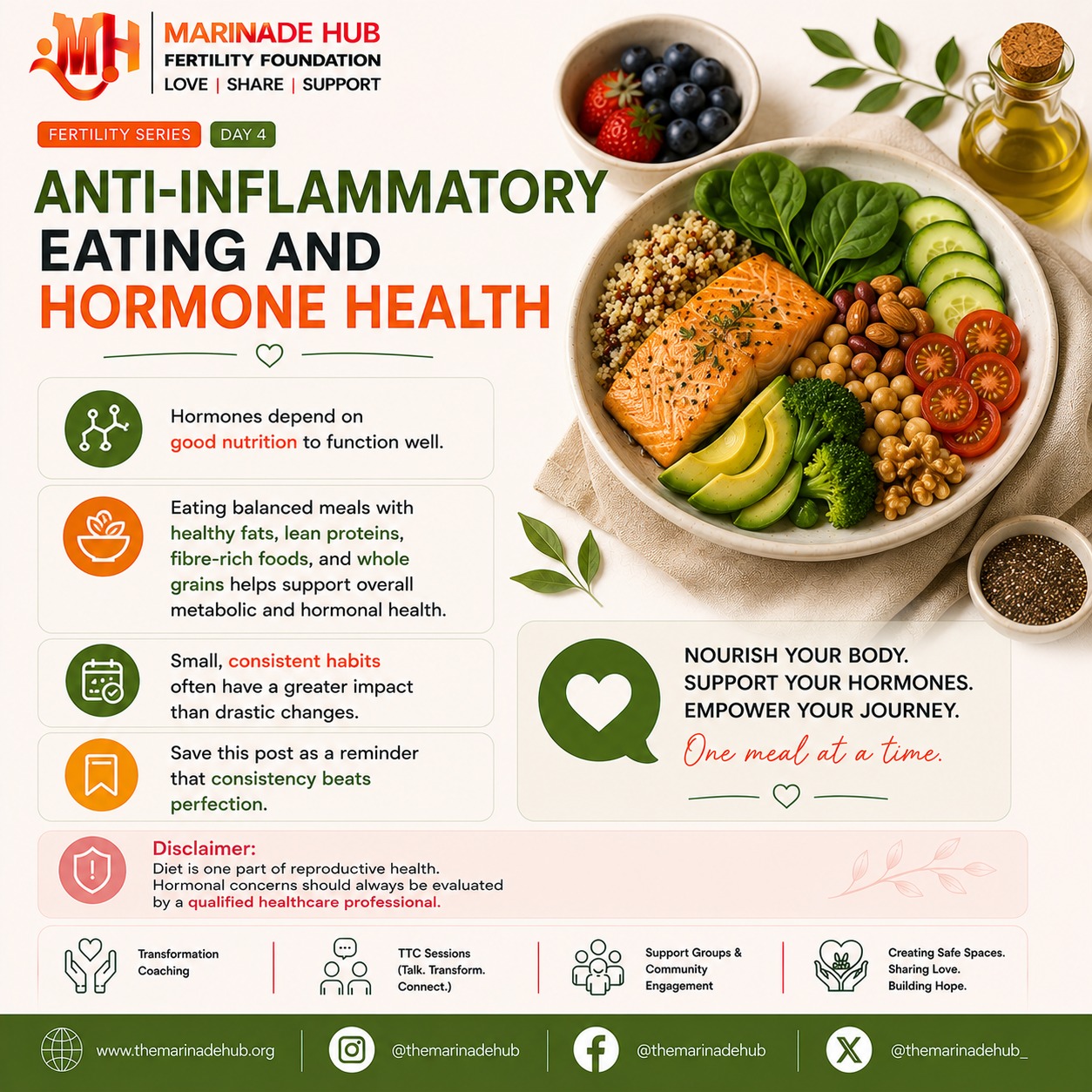
Nutrition and Hormone Health
Hormones rely on adequate nutrition to function properly.
Eating balanced meals that include healthy fats, lean proteins, fibre-rich foods, fruits, vegetables, and whole grains helps support overall metabolic and hormonal health.
Consistency is far more beneficial than perfection. Small healthy choices made every day can have a lasting impact on your overall well-being.
Don’t Forget Hydration
Water plays an essential role in digestion, circulation, nutrient transport, and many other body functions.
Simple ways to stay hydrated include:
– Carrying a reusable water bottle
– Drinking water regularly throughout the day
– Including water-rich fruits and vegetables in your meals
Hydration is a simple but powerful part of a healthy lifestyle.
Lifestyle Habits That Complement Healthy Eating
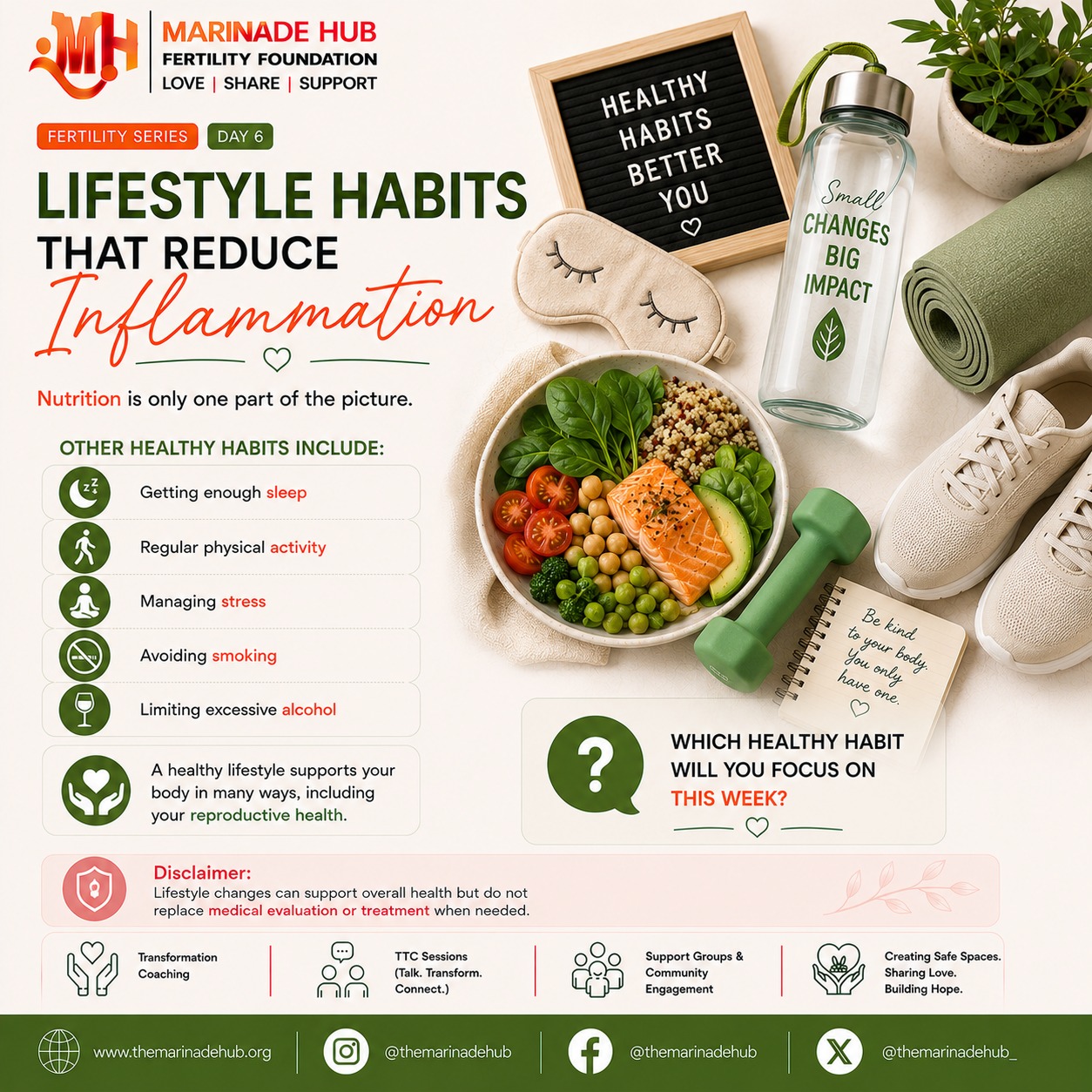
Nutrition works best when combined with other healthy habits, such as:
– Getting enough quality sleep
– Exercising regularly
– Managing stress effectively
– Avoiding smoking
– Limiting excessive alcohol intake
Together, these habits help support your overall health and may contribute to better reproductive wellness.
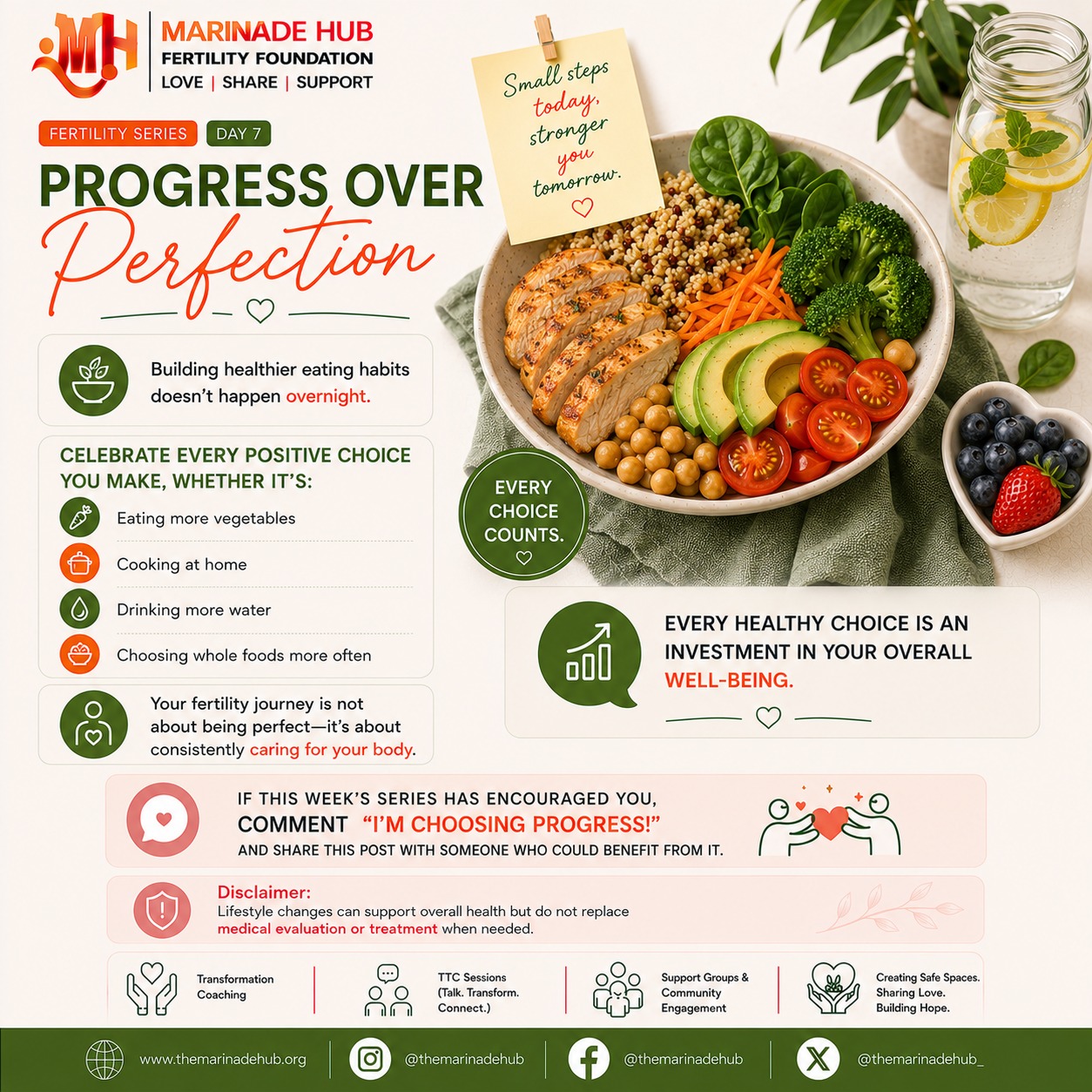
Progress Over Perfection
Building healthier habits takes time. Celebrate every positive step—whether it’s choosing more vegetables, preparing meals at home, drinking more water, or becoming more physically active.
Your fertility journey is not about perfection. It is about making consistent choices that support your health and well-being.
Every healthy habit is an investment in your future.
Final Thoughts
An anti-inflammatory lifestyle is about nourishing your body with wholesome foods, staying active, managing stress, and caring for your overall health. While these habits cannot replace medical evaluation or fertility treatment, they can become valuable parts of a comprehensive fertility care plan.
If you have concerns about your fertility or hormone health, speak with a qualified healthcare professional for personalised guidance.